Welcome to JIECHENG

Leave Your Message
0%

Choosing the best Heat Thermal Insulation Sheet in 2026 isn't just about looking at thickness or price. Honestly, the real performance of these sheets depends on a bunch of factors—like thermal conductivity, how well they resist heat, moisture control, how much they can handle pressure, and how they’re installed. A super thin sheet might save you some space, but don’t assume it’ll hold up if there’s vibration, repeated heating, or trapped condensation. Sometimes what you see on the surface doesn’t tell the whole story.

Joseph Lstiburek, a well-respected expert in building science, once said, “The building enclosure is a system, not just a bunch of separate products.” And, honestly, that’s a really good point here. When picking a Heat Insulation Sheet, it’s important to think about your specific setup—what kind of equipment you’re insulating, the climate the building’s in, the overall design, and how it’ll be maintained. If you’re dealing with industrial ovens, steam pipes, battery systems, or HVAC enclosures, you should dig into tested R-values, temperature limits, how it behaves in a fire, aging info, and whether it’s compatible with chemicals you might encounter. Just relying on marketing claims? Not enough anymore.

Pay attention to the little details. Does the sheet stay stable against hot metal surfaces? Can installers cut it without leaving gaps? Will its adhesive hold up through temperature swings? These practical questions often make or break how well the insulation actually performs. I’d say it’s worth checking out independent lab tests, technical datasheets, and quality control records—more than just being impressed by glossy marketing language.

There’s no one-size-fits-all answer here.

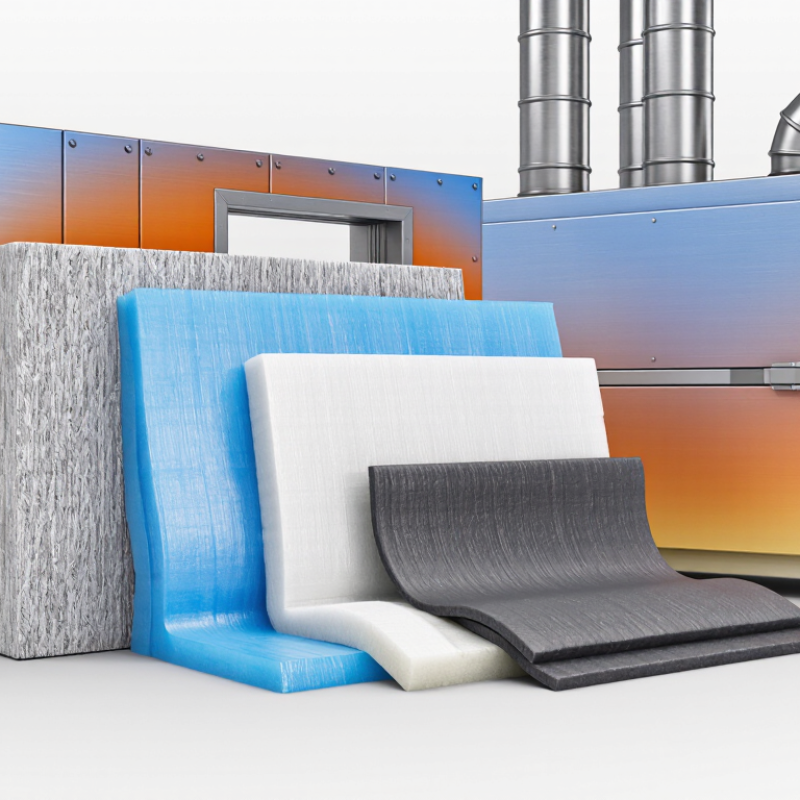
Materials like mineral wool, aerogel composites, ceramic fiber, elastomeric foam, and microporous panels each have their own strengths for different situations. Aerogel, for example, offers incredible insulation in tight spaces, but it can be pricey and tricky to handle. Ceramic fiber handles extreme heat well, but you’ll need to manage exposure carefully. Honestly, my advice is pretty flexible—there’s no single best choice. Instead, pick your insulation after assessing the real-world conditions, chatting with qualified engineers, and making sure it meets current safety standards. The material that really wins is the one that performs reliably over time—and not just the one that looks good on paper or in a lab test.
What Is the Best Heat Thermal Insulation Sheet in 2026?

Define “Best” by Conductivity, R-Value, Temperature Range, and Service Life

Choosing the best Heat Resistant Thermal Sheet starts with measured performance, not marketing language. Thermal conductivity is the clearest comparison. Lower values reduce heat flow. ISO 8301 and ASTM C177 describe guarded hot plate methods for reliable testing. At room temperature, high-performance microporous sheets may reach about 0.020 W/m·K, while ceramic-fiber sheets often range from 0.05 to 0.10 W/m·K. Test temperature matters greatly.

R-value is thickness-dependent. A 10-millimeter sheet with 0.020 W/m·K conductivity provides approximately 0.50 m²·K/W. Doubling thickness roughly doubles resistance, if compression and air gaps are controlled. ASHRAE Handbook—Fundamentals warns that real assemblies can perform below laboratory values because of joints, moisture, and installation defects. I have seen small edge gaps create visibly hotter zones during infrared inspections. That practical weakness deserves more attention.

Tips: Match the sheet to the actual temperature range, not the short-term maximum. Aerogel-based sheets suit compact insulation, while ceramic fiber tolerates higher continuous temperatures. Check published data at your operating temperature. Ask for shrinkage, density, compression, and aging results. IEC 60068 thermal-cycling methods can help assess durability, although they do not predict every field condition. Service life may exceed ten years in stable, dry systems, but repeated vibration, oil exposure, and thermal cycling can shorten it. “Best” remains application-specific.handzu

Compare Sheet Materials: Aerogel ≈0.013 and PIR ≈0.022 W/m·K

What Is the Best Heat Thermal Insulation Sheet in 2026?

Aerogel and PIR are strong contenders, but their performance differs in practical conditions. Aerogel can reach approximately 0.013 W/m·K. PIR typically measures near 0.022 W/m·K. Lower conductivity means greater thermal resistance at the same thickness. Aerogel therefore suits narrow gaps, equipment panels, and retrofit areas where every millimetre matters. Very thin insulation helps preserve usable room space.

PIR is usually easier to cut, handle, and install across large wall or roof surfaces. Its rigid structure also supports consistent thickness under normal loading. Aerogel sheets can be lighter and thinner, yet some products are fragile during cutting. Dust control and careful joint treatment matter. Small gaps can undermine impressive laboratory figures. They really can.

Moisture exposure, compression, surface temperature, and installation quality affect real heat flow. Ask for tested conductivity values, not only general product claims. Check the declared temperature and humidity conditions. Fire behaviour and facing materials also deserve professional review. A lower number does not automatically mean a better system. I would compare total thermal resistance, service life, fitting difficulty, and project cost together. My own first comparison would have focused only on conductivity; that would have been too narrow. Insulation should be selected for the building detail, not the headline figure alone.

Lower thermal conductivity indicates better thermal insulation. Typical conductivity values are shown in W/m·K and may vary with density, moisture, temperature, and product structure. Aerogel and PIR generally provide the lowest conductivity among the compared sheet materials.

Verify Thermal Ratings Using ASTM C518 and ISO 8301 Test Methods

What Is the Best Heat Thermal Insulation Sheet in 2026?

Choosing the best Heat Insulation Sheet starts with verified thermal data, not a dramatic product claim. ASTM C518 and ISO 8301 use heat flow meter methods to measure heat moving through a prepared specimen. The result commonly includes thermal conductivity and thermal resistance.

A reliable test report should show specimen thickness, density, mean test temperature, and conditioning time. These details matter. A sheet tested at 23°C may perform differently inside a hot roof or cold wall. Moisture can also change the result, especially in porous materials. Check whether the sample was compressed before testing. Installation pressure may reduce its real thickness.

During evaluation, place the reported R-value beside the material’s tested thickness. Do not compare values blindly. Different laboratories may use different temperature ranges, surface conditions, or calculation practices. ASTM C518 and ISO 8301 improve consistency, but they do not remove every testing limitation.

Look for repeat measurements and stated uncertainty. Ask whether the laboratory controls contact resistance and edge heat loss. A small gap around a sample can distort the reading. In my view, a strong report is more useful than a perfect-sounding number. Still, laboratory data is not the whole installation. Seams, fasteners, dust, moisture, and aging can weaken field performance. That uncomfortable gap deserves attention.

Calculate Thickness: Compare R-Value Gains at 25 mm and 50 mm

Choosing the best Heat Resistant Insulation Sheet in 2026 starts with thickness, not advertising claims. R-value measures resistance to heat flow, but its unit must be stated clearly.

Use this basic formula:

R = thickness ÷ thermal conductivity

Assume a tested conductivity of 0.040 W/m·K. At 25 mm, the calculated R-value is 0.625 m²·K/W. At 50 mm, it reaches 1.25 m²·K/W. That is double the ideal resistance.

On a workshop wall, the thicker sheet can reduce heat transfer noticeably. Surface temperatures may feel less harsh near a furnace or heated pipe. However, the installed gain is rarely perfect. Fasteners, seams, crushed corners, and gaps create thermal bridges. A 50 mm sheet with poor joints may perform worse than a carefully fitted 25 mm layer. Moisture can also change thermal performance over time.

I would compare laboratory R-values with field conditions. Check the declared conductivity, test temperature, density, and compression limits. Do not accept a simple thickness claim. Measure the available space, then calculate both options before installation.

A thicker layer may require longer fixings and better edge sealing. I would also question my own calculation, because real surfaces are uneven and heat rarely travels in one straight direction. Small gaps matter.

Screen Fire Safety Through ASTM E84 and EN 13501-1 Classifications

Choosing the best heat thermal insulation sheet in 2026 requires more than comparing temperature limits. Fire classification should guide the decision. ASTM E84 measures flame spread and smoke developed on a material’s surface. A lower flame-spread index generally indicates better surface-burning performance. However, ASTM E84 results do not equal a complete fire-resistance rating.

EN 13501-1 uses classes from A1 to F, with additional ratings for smoke production and flaming droplets. A1 and A2 materials usually offer stronger reaction-to-fire performance than lower classes. Still, the test method, product thickness, facing, joints, and installation conditions matter.

I would not call one sheet universally best. A high-rated core can perform poorly when exposed edges remain unsealed. That detail is easy to miss.

Tips: Request current, independent test reports. Check whether the tested thickness matches your project. Compare ASTM E84 data with the correct EN 13501-1 classification, rather than treating them as interchangeable. Inspect cut edges, penetrations, adhesives, and support spacing before installation. Small gaps can become serious weak points during a fire.

A practical review should also examine thermal conductivity, moisture resistance, dimensional stability, and service temperature. Fire safety comes first, but insulation that absorbs water may lose thermal performance. Certification documents deserve careful reading. Even experienced teams can overlook a changed facing or revised test scope. That deserves a second check.

Assess Moisture, Compression, and Thermal Aging Performance

What Is the Best Heat Thermal Insulation Sheet in 2026?

The best Thermal Insulation Sheet Material is not chosen by low thermal conductivity alone. Moisture can fill air spaces and raise heat transfer. ASHRAE Handbook—Fundamentals identifies moisture control as a critical factor in insulation performance. ASTM C518 testing should be paired with humidity conditioning, not used alone.

Compression also deserves close attention. A sheet under continuous load may become thinner beside a hot pipe or equipment frame. ASTM C165 measures compressive behavior, while ASTM C1303 evaluates long-term thermal resistance changes. A practical test should record thickness loss, recovery, and conductivity after repeated loading. Even a 10% thickness reduction can create thermal weak spots. Small gaps matter.

Tips: Request data at your actual temperature and humidity. Check whether the report uses dry, conditioned, or wet samples. Compare compression at the design load, not only at peak load. For thermal aging, ask for results after extended exposure, such as 80°C or 100°C conditioning, then inspect cracking and shrinkage. In field inspections, I have seen clean laboratory sheets fail around seams and fasteners. That weakness is easy to miss. I also distrust perfect first readings; installation pressure, water uptake, and aging can change the result. Re-test samples after cutting, bending, and fastening.

Match the Sheet to Buildings, HVAC, Cold Chain, and High-Heat Systems

What Is the Best Heat Thermal Insulation Sheet in 2026?

The best insulation sheet depends on the building system, not the product label. The IEA Buildings 2023 report states that buildings consumed about 30% of global final energy in 2022. It also linked buildings to roughly 26% of energy-related emissions. For walls and roofs, choose sheets with low thermal conductivity, stable dimensions, moisture resistance, and tested fire performance. A thin sheet can save space. It may not survive compression, wet cavities, or poor joints.

HVAC systems need a different match. Duct and pipe insulation should limit heat gain, condensation, and vibration damage. Surface temperature, vapor control, and installation quality matter as much as lambda value. The Global Cooling Watch 2023 reports that cooling demand could more than triple by 2050 without stronger efficiency measures. Seams around valves and bends deserve close inspection. Small gaps become visible energy losses.

Cold-chain panels require continuous insulation, strong joints, and low moisture absorption. A damaged corner can raise compressor demand for months. High-heat systems need materials tested for their actual operating temperature, not only room-temperature conductivity. Check maximum service temperature, thermal aging, thermal shock, and fire behavior. ASHRAE guidance supports evaluating insulation as part of the complete system. This is often missed. A lower conductivity number does not guarantee better field performance. Engineers should verify test methods, thickness, tolerances, and site conditions before specifying a sheet. Relying on one laboratory value remains an avoidable weakness.

What Is the Best Heat Thermal Insulation Sheet in 2026? — Match the Sheet to Buildings, HVAC, Cold Chain, and High-Heat Systems
Insulation Sheet Type Best-Fit Application Typical Thermal Conductivity
(W/m·K at ~24°C)
Typical Service Temperature Approx. R-Value per Inch
(h·ft²·°F/Btu)
Moisture Performance Key Strength Important Limitation
Polyisocyanurate (PIR) Rigid Board Building envelopes, roofs, walls, refrigerated rooms, and insulated panels 0.020–0.028 Approximately −50°C to 120°C 6.0–8.0 Closed-cell structure provides good resistance when joints and facings are properly sealed High thermal resistance with relatively low thickness Performance can decline at elevated temperatures; joints, facings, and fire classification must be specified
Phenolic Foam Board HVAC ductwork, building walls, roofs, and space-limited thermal systems 0.020–0.025 Approximately −50°C to 120°C 5.7–7.1 Low water absorption in suitable faced systems; vulnerable edges require protection Very high insulation efficiency and low smoke potential compared with many plastic foams Can be more brittle than other rigid foams and may require careful cutting and joint treatment
Flexible Elastomeric Foam Sheet Chilled-water pipes, HVAC ductwork, air-conditioning systems, and condensation control 0.033–0.040 Approximately −50°C to 110°C 3.6–4.4 Closed-cell structure provides strong resistance to water vapor when seams are sealed Flexible installation and excellent condensation-control capability Lower maximum temperature than mineral, calcium-silicate, or ceramic-fiber products
Mineral Wool Rigid Board Commercial and industrial buildings, façades, fire-rated walls, roofs, and HVAC systems 0.034–0.041 Approximately −50°C to 650°C, depending on product and facing 3.8–4.3 Fibrous structure can absorb water if exposed; use suitable facings and weather protection Non-combustible behavior, sound absorption, and good fire resistance Heavier and generally thicker than high-performance foam boards for the same R-value
Extruded Polystyrene (XPS) Board Below-grade walls, foundations, floors, roofs, and building thermal bridges 0.029–0.036 Approximately −50°C to 75°C 4.0–5.0 Low water absorption and good resistance to ground moisture when correctly installed Durable compressive strength and reliable performance in below-grade construction Not intended for high-temperature systems; combustible and must be protected where required
Aerogel Composite Sheet or Blanket Space-constrained buildings, industrial equipment, cryogenic lines, and complex pipework 0.013–0.020 Approximately −200°C to 650°C, depending on construction 8.0–12.0 Often water-repellent, but outer jacketing and sealed interfaces remain important Exceptional insulation performance at very small thicknesses Higher cost; handling may generate dust, and the complete system must be checked for mechanical durability
Calcium Silicate Board High-temperature pipes, boilers, furnaces, kilns, and industrial equipment 0.055–0.080 Approximately 25°C to 650°C 2.8–4.0 Porous and moisture-sensitive before drying; protect from water during storage and installation Rigid, non-combustible insulation with good compressive strength at elevated temperatures Lower insulation efficiency than foam or aerogel; may require greater thickness and weather protection
Ceramic Fiber Board Furnace linings, kiln doors, heat shields, burner systems, and extreme-temperature equipment 0.10–0.20 at room temperature Approximately 1,000°C to 1,260°C, depending on grade 1.4–2.8 Generally unaffected by water after drying, but wetting can reduce temporary thermal performance Highest temperature capability among the sheet types listed Lower room-temperature R-value; fibers require appropriate handling controls and surface protection
Selection note: Thermal conductivity, R-value, service temperature, fire behavior, moisture resistance, mechanical strength, and installation thickness vary by product density, facing, thickness, aging, and test method. Confirm the manufacturer’s technical data, local building codes, fire requirements, and system design conditions before specification.

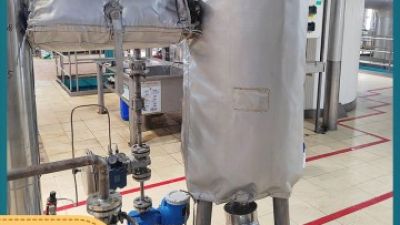
Durable Removable Industrial Insulation Garment: Protection, Performance, and Practical Applications

Durable removable industrial insulation garments are designed to protect personnel, reduce heat loss, and simplify maintenance around pipes, valves, flanges, pumps, and other high-temperature equipment. With a service range of -70°C to 1,000°C, these covers support demanding thermal environments while remaining removable for inspection and repair. Their 35–50 mm thickness and thermal conductivity below 0.035 W/(m·K) at normal temperature help limit surface heat transfer. A material density of 100–200 kg/m³ provides a practical balance between insulation performance, flexibility, and manageable installation weight.

Energy efficiency is an important industrial concern: the International Energy Agency’s *Energy Efficiency 2023* report identifies industry as responsible for approximately 37% of global final energy consumption. Properly insulated equipment can reduce avoidable heat loss, improve process stability, and lower the risk of contact burns. The garment’s A-grade non-flammable performance is suitable for high-risk thermal areas, while acid and alkali resistance, corrosion resistance, and protection against water and oil support use in chemical processing, power generation, manufacturing, and marine environments.

Unlike permanent insulation systems, removable covers can be opened and refitted repeatedly without extensive dismantling. A design life exceeding 10 years can reduce replacement frequency and maintenance disruption when the garments are correctly installed and routinely inspected in accordance with applicable insulation and fire-safety practices.

FAQS

How should I decide which heat-resistant insulation sheet is best?

Compare conductivity, operating temperature, fire classification, moisture resistance, durability, and installation needs. The lowest conductivity alone does not guarantee the best system.

What does thermal conductivity tell me?

Lower conductivity means less heat passes through the material. Microporous sheets may measure around 0.020 W/m·K at room temperature, while ceramic-fiber sheets often range from 0.05 to 0.10 W/m·K.

How does sheet thickness affect thermal resistance?

A 10-millimeter sheet at 0.020 W/m·K provides roughly 0.50 m²·K/W. Doubling thickness can roughly double resistance, if compression and air gaps are controlled.

Are aerogel and PIR suitable for different projects?

Aerogel can suit narrow gaps, with conductivity around 0.013 W/m·K. PIR, near 0.022 W/m·K, is often easier to cut and install over larger surfaces.

What can reduce insulation performance after installation?

Gaps, moisture, compression, vibration, oil exposure, and repeated temperature changes can weaken performance. Even a small edge gap may create a hotter spot.

How should I compare fire classifications?

Review current test reports and confirm that thickness, facing, joints, and installation match your project. ASTM E84 and EN 13501-1 use different classification systems.

Does a strong fire rating guarantee fire resistance?

No. ASTM E84 measures surface flame spread and smoke development, not a complete fire-resistance rating. Unsealed edges and penetrations also matter.

How long can an insulation sheet last?

Some sheets may last more than ten years in stable, dry systems. Service life can fall with vibration, oil exposure, or thermal cycling. Conditions vary.

What test details should I request before choosing a sheet?

Ask for conductivity at your operating temperature, plus shrinkage, density, compression, aging, and fire-test results. Check that the tested product matches the one being installed.

Conclusion

Choosing the best Heat Thermal Insulation Sheet in 2026 requires more than selecting the material with the lowest thermal conductivity. A practical evaluation should consider conductivity, R-value, operating temperature, service life, moisture resistance, compression strength, and thermal aging. Aerogel sheets may offer very low conductivity near 0.013 W/m·K, while PIR is typically around 0.022 W/m·K. Comparing R-value gains at 25 mm and 50 mm helps determine whether a thinner, higher-performing sheet justifies its cost and installation requirements.

Thermal claims should be verified through recognized test methods such as ASTM C518 and ISO 8301. Fire performance can be screened using ASTM E84 and EN 13501-1 classifications, while moisture and durability testing helps predict long-term reliability. The right sheet ultimately depends on the application, whether it is building insulation, HVAC equipment, cold-chain transport, or high-heat systems. A balanced decision should match thermal performance with safety, environmental exposure, available space, and expected service life.

Seraphina

Seraphina

Seraphina is a dedicated marketing professional at Jiangxi Jiecheng New Materials Co., Ltd., where she specializes in high-temperature insulation products. With a deep understanding of the company's core offerings, including detachable thermal insulation sleeves, high-temperature insulation boards,......
Previous How to Choose the Best High Insulation Material?