Welcome to JIECHENG



Leave Your Message
Welcome to JIECHENG
Picking the best High Insulation Material isn't just about finding the one with the lowest thermal conductivity. Honestly, it’s a lot more complicated than that. Real buildings have to deal with moisture, fire risks, noise, space restrictions, costs, and tricky installation conditions. Something that looks fantastic in a lab can totally fall flat once you factor in things like open joints or water seeping into the wall cavity—it's a whole different ballgame.
According to the International Energy Agency’s Buildings 2023 report, building operations make up around 30% of the world’s final energy use and about 26% of energy-related emissions. That puts insulation into the spotlight—not just as some technical detail, but as a genuine climate action. The U.S. Department of Energy also emphasizes that good insulation and sealing those tiny gaps around windows can make a real difference in cutting down heating and cooling needs. Trust me, even a small gap can quietly undermine what’s otherwise a pretty solid system.
Energy expert Amory Lovins, cofounder of the Rocky Mountain Institute, once said, “The cheapest energy is the energy you don’t use.” It’s a reminder, especially when you’re choosing between mineral wool, PIR boards, Aerogel Blankets, or vacuum panels. Each has its own pros and cons—different thermal resistance levels, thicknesses, fire safety, durability, and price points. And honestly, there’s no clear winner that fits all scenarios.
That kind of straightforward thinking? It’s a bit too tidy. The reality is, making a good choice means going beyond just looking at product datasheets. You’ve got to dig into tested R-values, how they handle moisture, their fire ratings, environmental info, and what the installers actually know. And don’t forget—what looks great on paper might not hold up once it’s been shipped, cut, fitted, and exposed to weather year after year. Sometimes, the best insulation is just the one that keeps working after all that stuff. But even that isn’t foolproof—performance data can vary depending on standards, suppliers, and actual job site conditions. So, yeah, careful comparison is still pretty much essential.
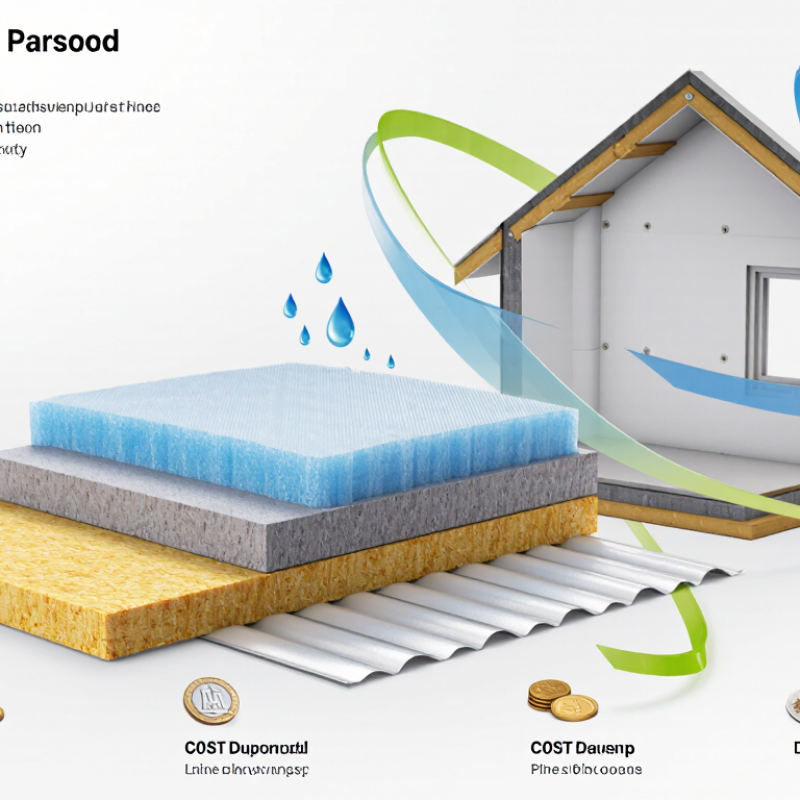
How to Choose the Best High Insulation Material?
High insulation means resisting heat flow, not simply using a thicker product. A high R-value slows heat movement, while a low U-value indicates better overall thermal performance. Yet these figures describe laboratory conditions. On site, gaps, compression, moisture, and thermal bridges can reduce performance sharply. A small unsealed joint near a window may undermine an otherwise excellent wall.
Material choice matters because buildings consume enormous resources. The United Nations Environment Programme’s 2023 Global Status Report states that buildings represented 34% of global energy demand and 37% of energy and process-related carbon emissions in 2022. Insulation can reduce heating and cooling loads, but its value depends on climate, moisture exposure, fire performance, durability, and installation quality. In cold regions, vapor control and airtightness deserve close attention. In humid regions, drying potential matters more than an impressive catalogue number.
Look beyond R-value.
In practical assessments, compare declared thermal conductivity, density, water absorption, service temperature, and environmental data. Environmental Product Declarations can reveal manufacturing impacts and replacement risks. The International Energy Agency also identifies building-envelope efficiency as a major route to lowering operational energy demand. Still, material selection is rarely perfect. A lower-impact insulation installed poorly may perform worse than a higher-impact option installed carefully. That uncomfortable trade-off deserves honest evaluation, not a single-number decision. Cite: UNEP Global Status Report for Buildings and Construction 2023; International Energy Agency, Buildings.
| Material Type | Typical Thermal Conductivity (W/m·K) | Approx. R-Value per 25 mm (m²·K/W) | Moisture Performance | Fire Performance | Typical Applications | Key Selection Consideration |
|---|---|---|---|---|---|---|
| Silica Aerogel | 0.013–0.020 | 1.25–1.92 | Generally hydrophobic, but performance depends on the product system and protective facing. | Usually non-combustible or highly fire resistant in mineral-based forms. | Space-constrained retrofits, industrial piping, and high-performance building details. | Excellent Insulation in very thin sections; higher cost and careful installation may be required. |
| Polyisocyanurate (PIR) | 0.020–0.028 | 0.89–1.25 | Low water absorption when faced and correctly detailed; joints require attention. | Better fire performance than many plastics, but it remains an organic polymer and must be assessed as a tested assembly. | Roofs, walls, floors, and insulated panels. | High thermal performance at moderate thickness; verify temperature limits and fire classification. |
| Phenolic Foam | 0.020–0.024 | 1.04–1.25 | Generally low water absorption with suitable facings and sealed joints. | Often has favorable fire and smoke properties, but results vary by formulation and facing. | Wall, floor, roof, and service duct insulation. | Very good insulation per unit thickness; check compatibility, brittleness, and certification. |
| Extruded Polystyrene (XPS) | 0.029–0.036 | 0.69–0.86 | Low water absorption and good resistance to intermittent moisture exposure. | Combustible polymer; requires protection and compliance with applicable fire requirements. | Below-grade walls, foundations, floors, and inverted roofs. | Useful where moisture resistance and compressive strength are important. |
| Expanded Polystyrene (EPS) | 0.032–0.038 | 0.66–0.78 | Moderate moisture resistance; detailing and exposure conditions strongly affect performance. | Combustible polymer; must be protected according to building regulations. | External wall systems, floors, roofs, and packaging-related thermal applications. | Lightweight and economical; select density and grade according to load and moisture conditions. |
| Mineral Wool | 0.034–0.045 | 0.56–0.74 | Vapor-open and generally water-repellent, but prolonged wetting reduces thermal performance. | Typically non-combustible with strong resistance to high temperatures. | External walls, roofs, partitions, fire barriers, and acoustic assemblies. | Strong fire and acoustic performance; requires protection from persistent water and air movement. |
| Fiberglass | 0.032–0.044 | 0.57–0.78 | Loses effectiveness when compressed or significantly wetted; requires a dry, well-installed cavity. | Glass fibers are non-combustible, while binders and facings may affect assembly ratings. | Cavity walls, attics, ceilings, partitions, and HVAC systems. | Widely available and lightweight; installation quality is critical to achieving the rated value. |
| Cellulose Fiber | 0.038–0.042 | 0.60–0.66 | Hygroscopic; can buffer moisture but must be protected from bulk water and long-term dampness. | Usually treated with fire retardants; performance depends on density, treatment, and assembly design. | Attics, framed walls, retrofit cavities, and blown-in insulation systems. | Good cavity-filling capability and recycled content; settlement and moisture control must be considered. |
Measure continuous temperature, peak temperature, heat cycles, moisture, vibration, and available space. A dry test may not reflect factory conditions. Small tests help.
No. Check density, maximum service temperature, thermal shock resistance, dimensional stability, and fire behavior. One impressive number can mislead.
Request independent reports covering temperature resistance, fire behavior, smoke emissions, and chemical stability. Confirm the material does not release irritating gases when heated. Keep ventilation available.
Repeated heating and cooling may cause cracks, shrinkage, or loose fibers. Ask for results after moisture, vibration, compression, and dust exposure. Real cycling reveals hidden weaknesses.
Careless fastening can damage thin insulation. Gaps, uneven density, and edge damage also reduce protection. Installation quality may matter as much as the material.
Inspect for gaps, brittle surfaces, loose fibers, and uneven thickness. Confirm the tested thickness matches the project. Do not guess.
Record material cost, installation time, service life, repair difficulty, and replacement needs. A thicker material may be easier to handle. A high-performing option may take longer to cut.
Review recycled content, manufacturing energy, transport weight, service life, and disposal requirements. Longer service life may reduce waste, but lifecycle evidence is still necessary. Claims need proof.
Choosing the right High Insulation Material is essential for improving energy efficiency, indoor comfort, and long-term building performance. High insulation means a material can effectively resist heat transfer, but the best option depends on more than thermal resistance alone. Important factors include thermal conductivity, moisture resistance, fire performance, acoustic properties, structural compatibility, service life, and ease of installation. Climate also plays a major role: cold, hot, humid, or mixed conditions may require different insulation characteristics, while building type, available space, ventilation, and exposure to water can further influence the decision.
Common material categories differ in cost, thickness, durability, environmental impact, and installation requirements. A practical choice should balance thermal performance with budget, labor, maintenance, and expected lifespan rather than focusing on one specification. Before installation, verify safety certifications, moisture and fire resistance, dimensional stability, and compatibility with surrounding components. Reviewing recycled content, production impacts, disposal options, and long-term performance can also support a more responsible and durable insulation strategy.