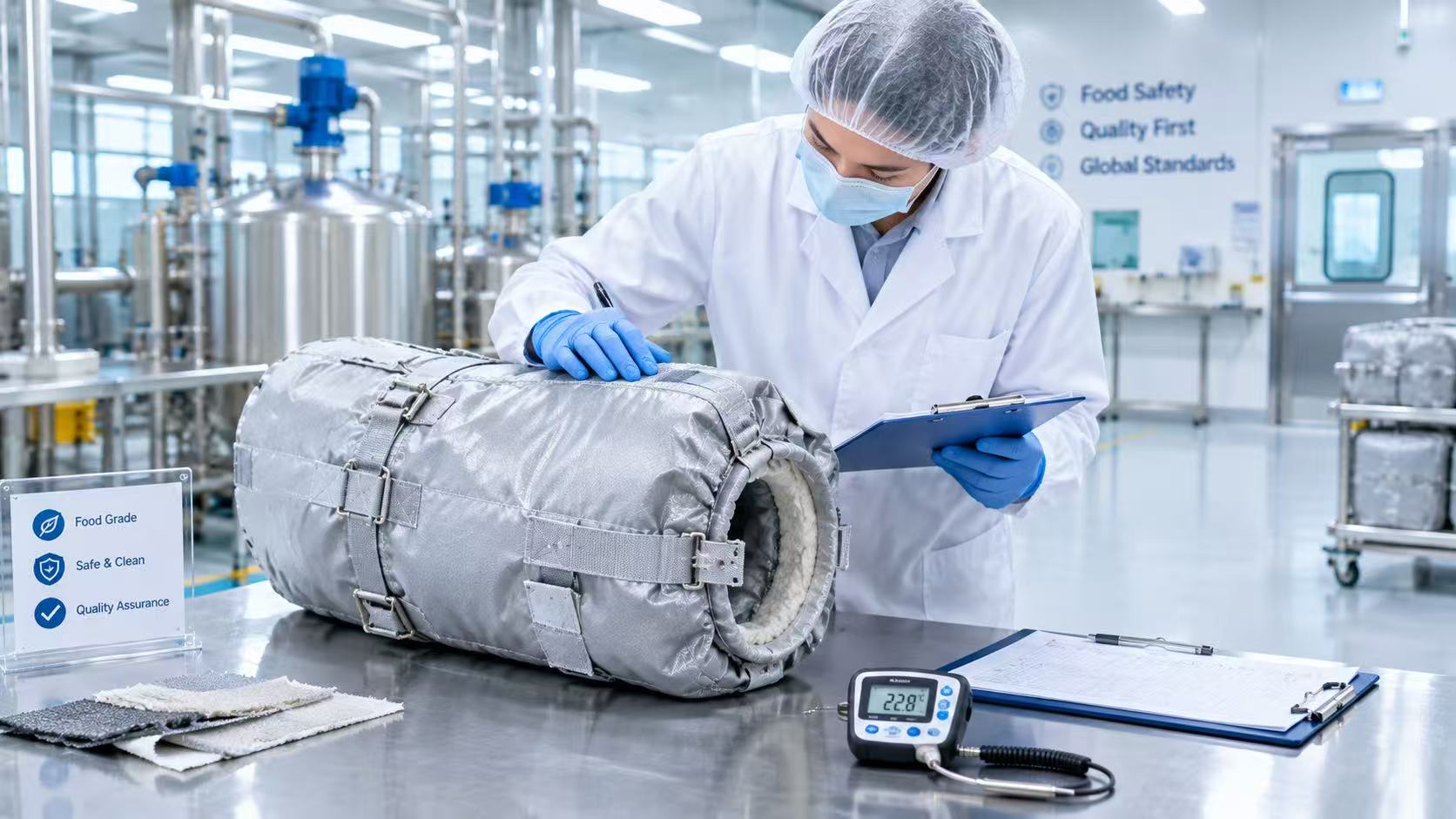


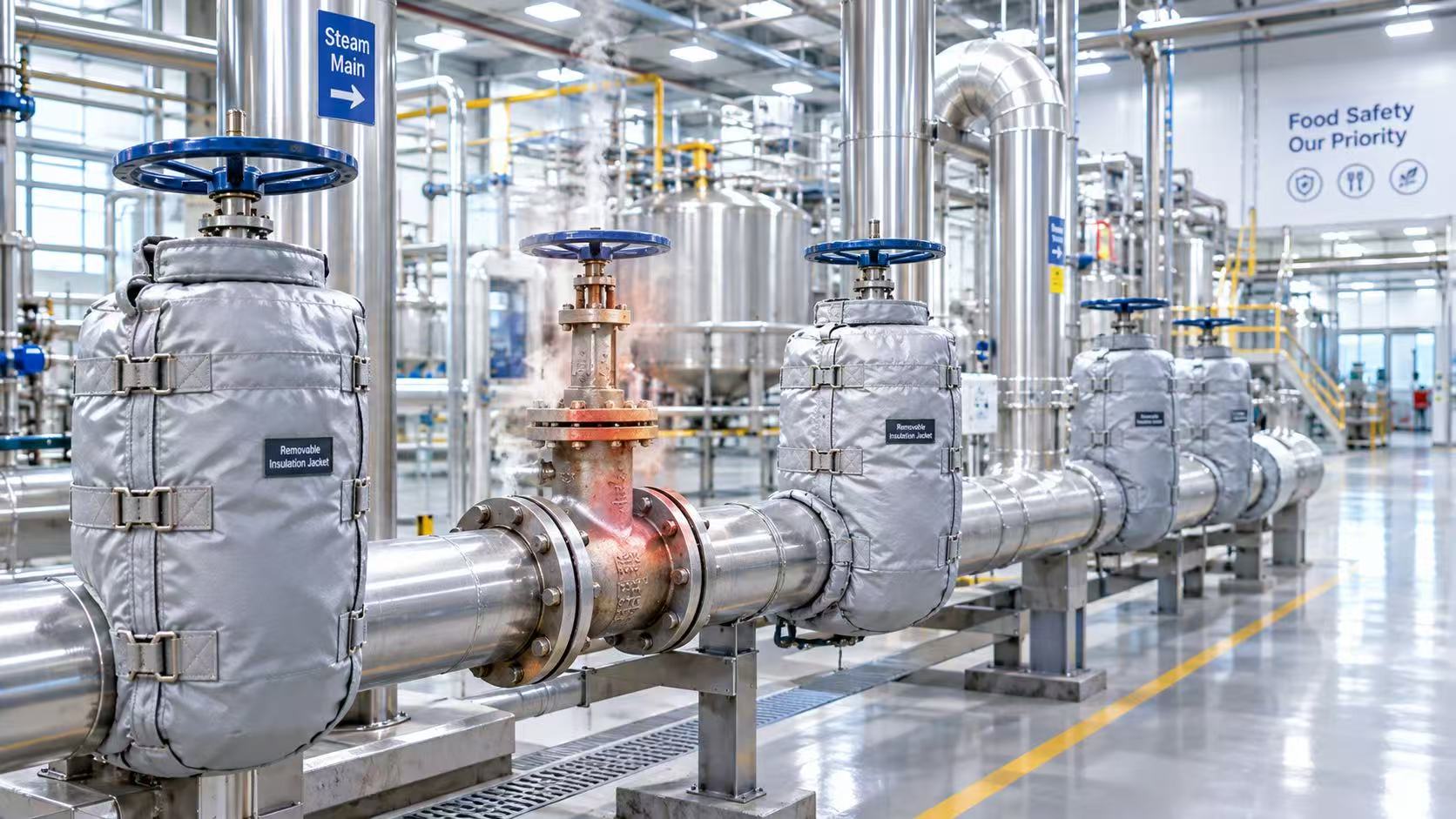

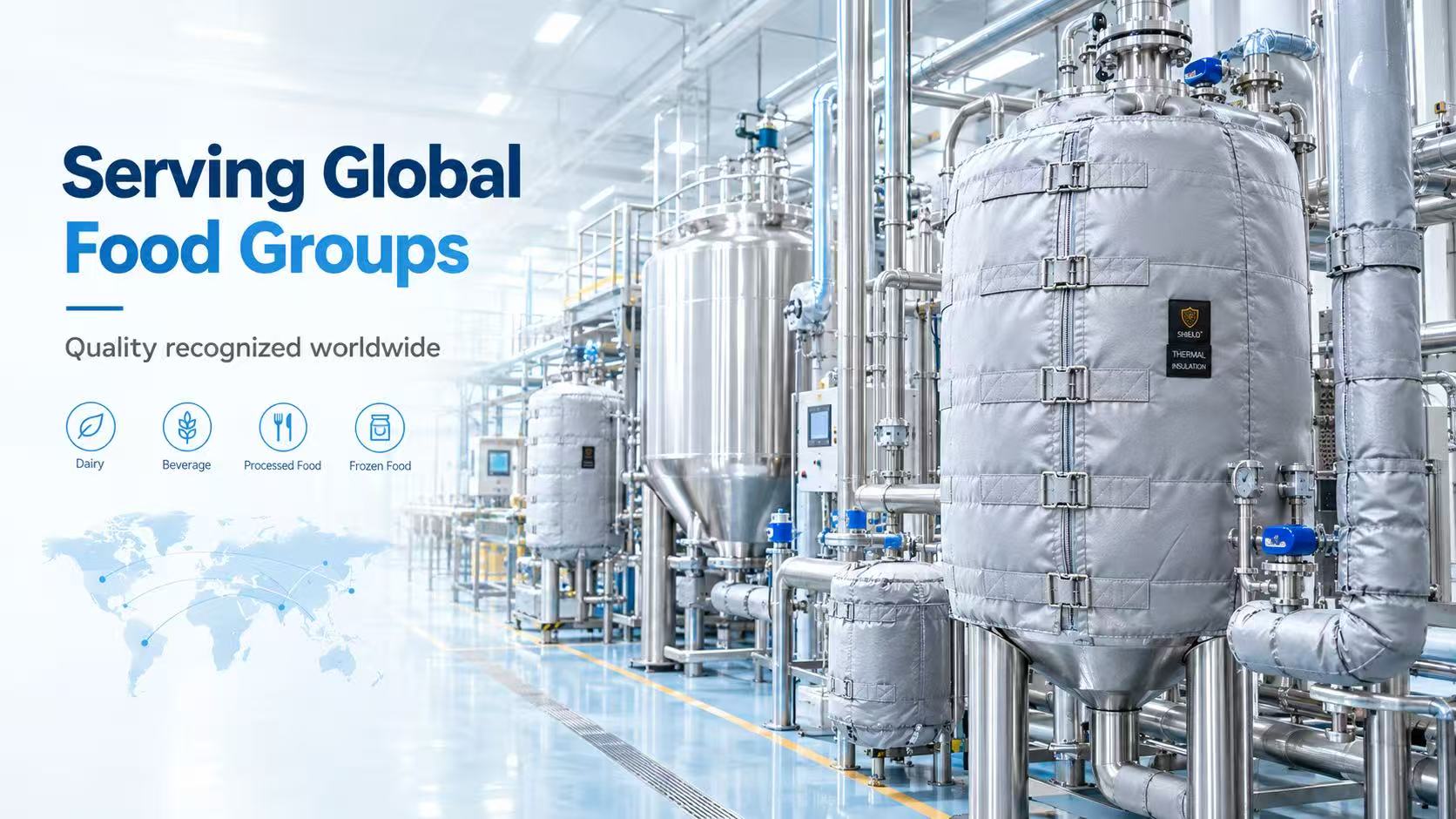
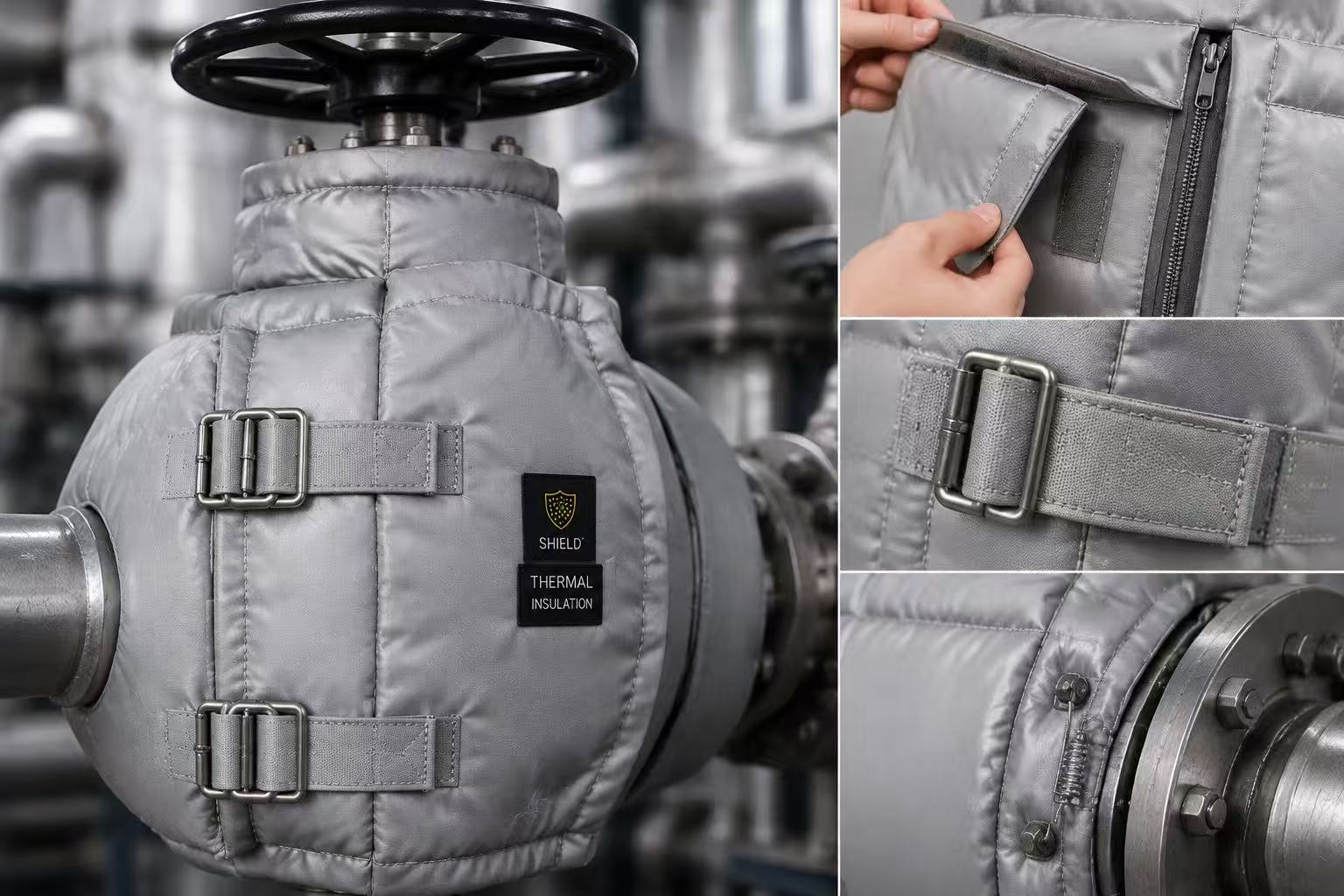
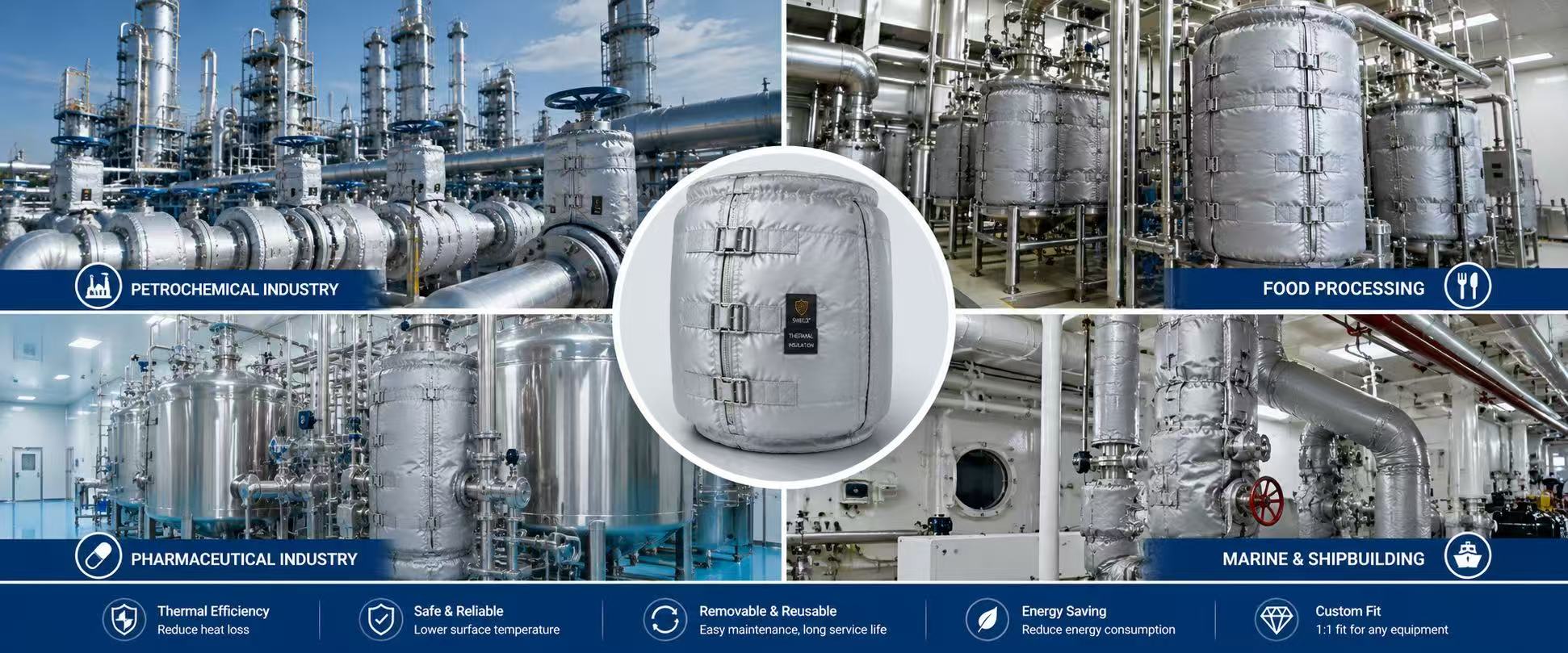
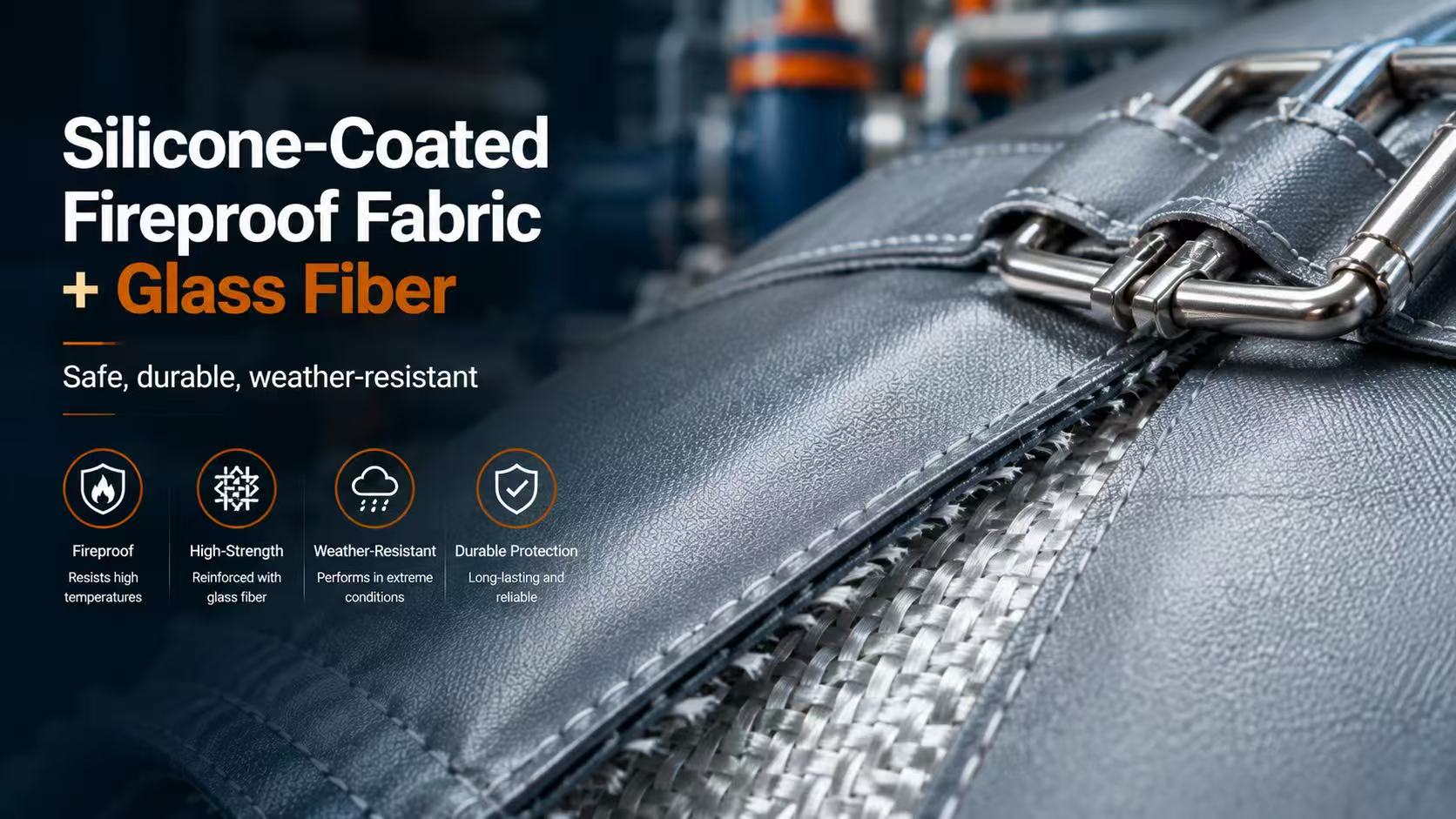
The first standard is cleanliness. Insulation Covers in food workshops must not shed fiber dust, absorb moisture, or become a breeding ground for microorganisms. The silicone-coated composite fabric outer layer is wipe-clean and non-permeable; the fiberglass felt is fully enclosed; the stitching uses fiberglass fire-resistant thread. Every element of this structure exists to ensure the cover "adds no problems" in a clean environment.
The second standard is maintenance friendliness. Food processing equipment is cleaned far more frequently than typical industrial equipment. A heat exchanger may be washed monthly; a valve may be inspected weekly. The hook-and-loop fastening design allows operators to remove and reinstall the cover in minutes — no tools, no specialized training — with no degradation in Insulation Performance after repeated cycles.
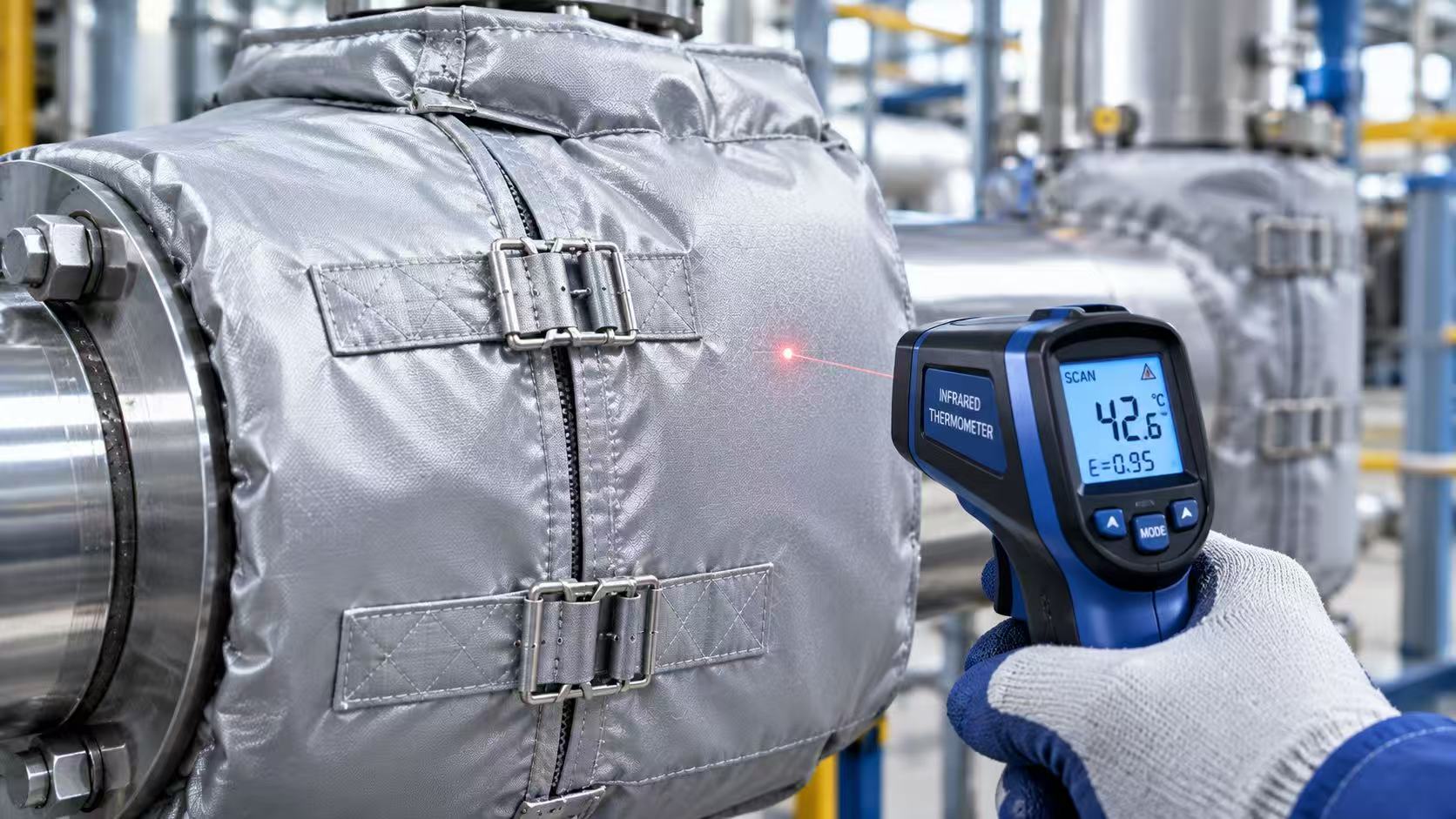
The third standard is safety margin. Behind the 260°C temperature rating, we focus on whether the fastener's temperature rating matches, whether the silicone fabric's aging curve under prolonged heat is controllable, and whether the thread's strength retention through thermal cycling is stable. These "invisible indicators" determine whether an insulation cover can withstand the test of time in a high-standard environment like Yihai Kerry's.
Becoming an Insulation Supplier to a leading food enterprise is, at its core, a test of attention to detail. We choose to invest our effort in the places no one sees.